
4 min
3 Jul 26
Crypto Ponzi CEO Pleads Guilty After $250M Loss: DeFi Claims Were Never On-Chain

Introduction: The Rise and Fall of Goliath Ventures
The financial markets are often seen as the playground for the savvy and well-informed, but the unfortunate saga of Goliath Ventures serves as a cautionary tale for investors at every level. The firm, under the guise of sophisticated yield generation, orchestrated one of the largest crypto Ponzi schemes in recent U.S. history. Christopher Alexander Delgado, the mastermind, fleeced investors out of a staggering $400 million before federal authorities brought his operation to a halt. Through the lens of decentralized finance (DeFi) transparency, this article unravels the intricate mechanics of the scheme and provides a meticulous breakdown of what went wrong and the lessons to be learned.
An Overview of the Fraud: Deceptive Promises and Gullible Investors
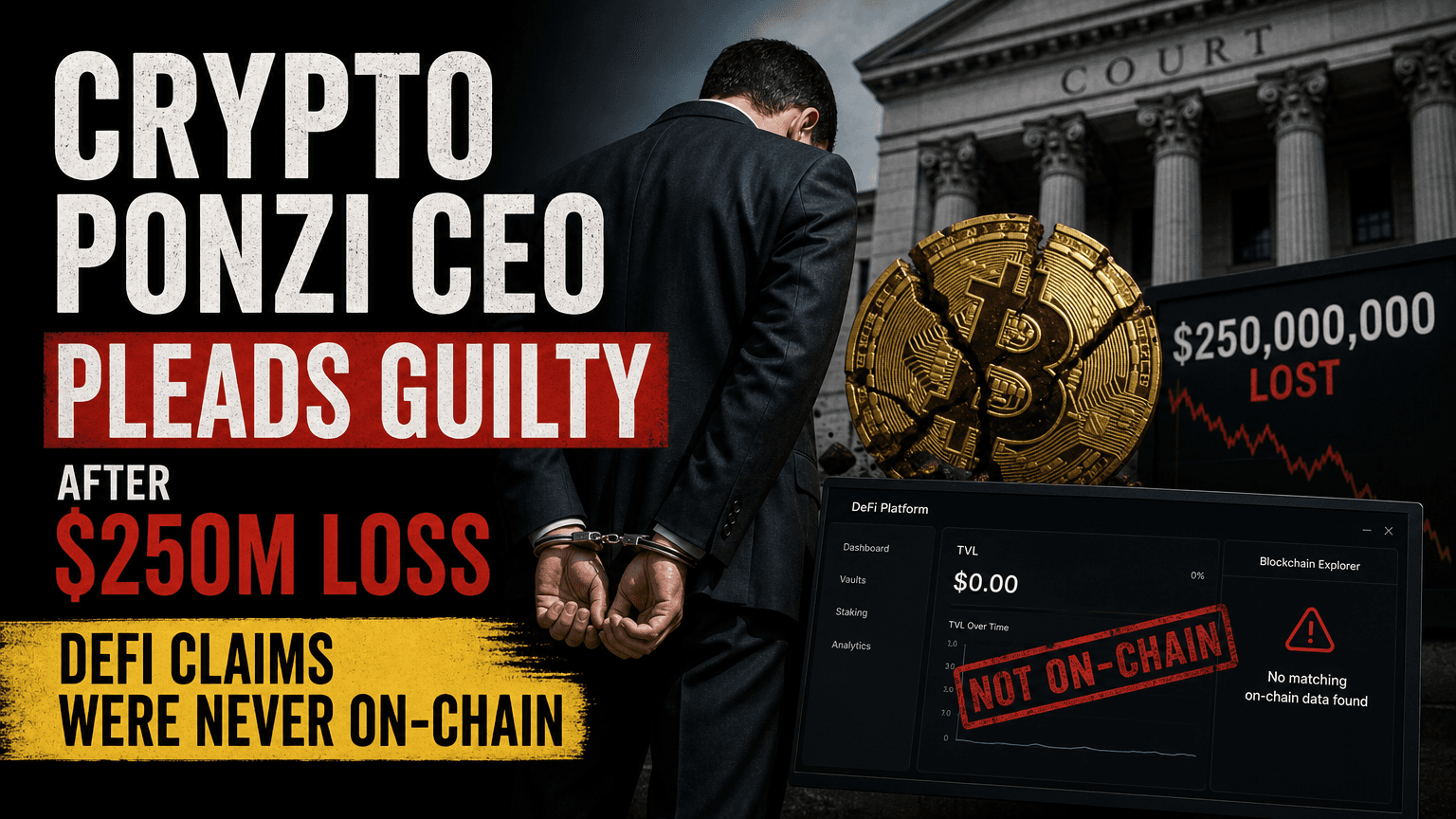
Delgado's operation was deceptively simple: promise high returns by investing funds into cryptocurrency liquidity pools on Uniswap, a decentralized exchange. The proposition hinged on the idea that these pools could deliver monthly returns of 3 to 8 percent. However, the reality was starkly different. Of the $400 million raised, a mere $1.5 million ever made its way to Uniswap—an amount easily verifiable with the transparency inherent in blockchain technology.
Understanding Liquidity Pools: A Basic Primer
To appreciate how the scandal endured for three years, one must first understand how legitimate liquidity pools operate. On platforms like Ethereum, participants contribute equal-value amounts of two cryptocurrencies into a smart contract. A decentralized process known as an automated market maker (AMM) executes trades and manages pricing, while liquidity providers earn fractions of transaction fees. Critically, every transaction—deposits, withdrawals, fees—is consistently recorded on the public ledger, viewable by anyone with internet access. Thus, any investor could have verified Goliath's limited engagement with Uniswap.
The Consequences of Inefficiency: Market Reality vs. Investor Perception
Despite clear discrepancies between Goliath's claims and reality, investors remained oblivious, largely due to unfamiliarity with DeFi mechanics. In a traditional setup, auditors and regulators must follow paper trails to validate activities, but with DeFi, the system is almost self-auditing. This presumes that users—investors—are equipped to engage with the blockchain's data troves, a presumption that failed Goliath’s victims.
The Anatomy of a Ponzi Scheme: From Banking Channels to Lawful Evasions
Delgado's scheme largely resembled a classic Ponzi cycle: use funds from new investors to pay earlier ones while siphoning off money for personal luxuries. Goliath's financial activities spanned various banks. Although flagged by financial institutions like JPMorgan Chase and later, Bank of America, the firm adeptly manipulated account closures and cash flows. This movement across banking institutions, seasoned with extravagant expenditure, manifested as pivotal indicators of illicit activity.
The Role of Financial Institutions: Enablers or Victims?
A related conversation emerges around the financial institutions that interacted with Goliath. Legal action taken against JPMorgan Chase, as noted in Steele v. JPMorgan Chase Bank N.A., accuses the institution of facilitating fraudulent activities by overlooking clear warning signs of a Ponzi scheme. This raises fundamental questions about bank obligations under anti-money laundering regulations and the essential scrutiny required to preemptively nip frauds in the bud.
The Legal Fallout: Class-Action Lawsuits and Bankruptcy Proceedings
Post-collapse, Goliath and its affiliates face several legal onslaughts, with civil suits exploring liabilities among banks, law firms, and associated entities. Yet, recovery for investors remains uncertain—Goliath’s bankruptcy filing, coupled with asset seizures, point towards a stark reality that honest recompense might largely be symbolic. Still, class-action avenues suggest possible restitution through sustained legal pressure on enabling institutions.
Investor Preparedness: How to Identify and Avoid Similar Pitfalls
The calamitous downfall of Goliath Ventures underscores a critical investor lesson: due diligence aligned with blockchain's inherent transparency is key. Potential investors in DeFi products should sieze upon tools like etherscan.io to independently verify operational claims made by investment firms. Promises of sustained high returns, especially those guaranteeing fixed monthly yields, should ring alarm bells, as they don’t align with DeFi protocols inherently variable nature.
Conclusion: Vigilance in an Evolving Market
In the intricate dance between innovation and opportunity, Goliath Ventures serves as a poignant reminder for all financial participants. Amid rapid technological evolution, student and seasoned investors alike are challenged to refine their knowledge and interrogation of financial narratives. As regulators catch up with innovation, personal diligence remains the strongest line of defense against financial malfeasance. If the case provides any singular insight, it's this: in the continuous expansion of cryptocurrency avenues, every safari comes with both allure and latent risk.