
3 min
29 Jun 26
Binance to halt EU crypto services after missing MiCA licence deadline
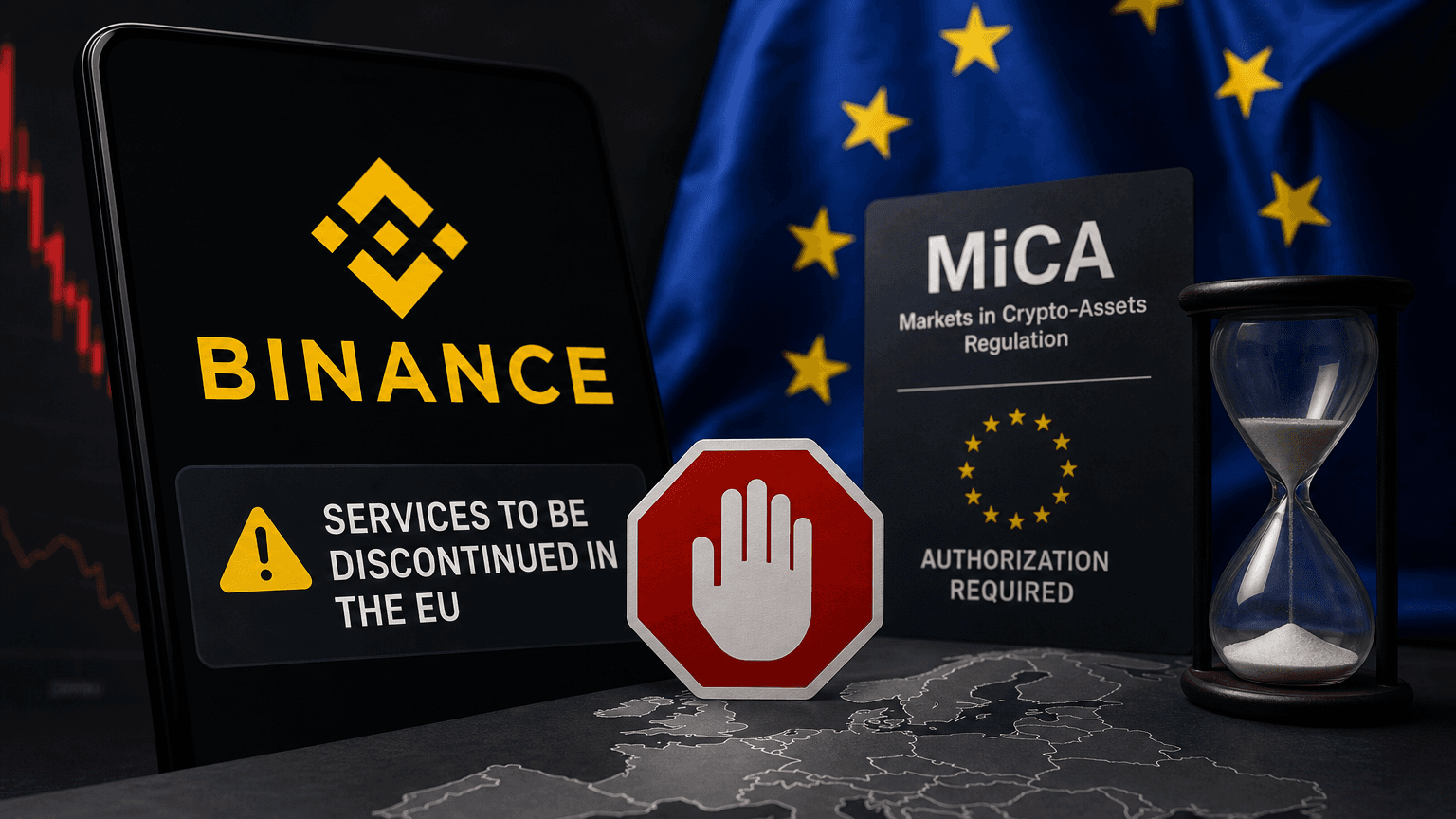

Binance Faces Regulatory Hurdles in the European Union with MiCA
The cryptocurrency landscape in Europe is undergoing a significant transformation, with Binance, the world's largest cryptocurrency exchange, finding itself at the center of a regulatory storm. Effective July 1, Binance will suspend its crypto services for customers across much of the European Union. This move comes as a direct consequence of the company’s failure to secure regulatory authorization under the newly established Markets in Crypto-Assets (MiCA) framework, marking a pivotal setback for Binance.
Understanding MiCA: Europe's Comprehensive Crypto Regulatory Framework
The MiCA regulatory framework represents the European Union's concerted effort to bring order and uniformity to the burgeoning crypto markets within its jurisdiction. As the first comprehensive regulatory structure for digital assets globally, MiCA seeks to unify disparate national regulations within the EU's 27 member states. The framework mandates a single licensing regime covering aspects such as exchanges, stablecoins, custody services, and consumer protection, thereby aiming to enhance market stability and user security.
According to industry estimates, the implementation of MiCA has caused ripples across the crypto sector, impacting over 1,200 firms previously operating under national registrations. Many of these companies faced challenges in meeting the new criteria, with analyses suggesting that less than 20% successfully secured MiCA authorization before the June 30 deadline, as reported by Euronews.
Binance's Strategic Withdrawal and Customer Assurance
In a strategic pivot, Binance opted to withdraw its MiCA license application in Greece after receiving indications from regulators that approval was unlikely before the deadline. Despite operational halts, Binance has assured customers that their digital assets remain secure and accessible. Although new user onboarding is paused and certain trading services will see limitations post-July 1, existing users can still conduct withdrawals and manage their asset custody during this transition period. This assurance was reiterated in company notices highlighted by CoinDesk, emphasizing Binance's commitment to maintain user confidence during regulatory transitions.
Implications and Challenges for Binance's Market Dominance
The current regulatory setback underscores a broader challenge for Binance: the ongoing battle to restore and fortify its global compliance standing amidst intense regulatory scrutiny. Despite commanding approximately 39% of the global centralized cryptocurrency trading volume, being barred from the EU’s significant market presents a formidable strategic impediment for Binance.
In response, Binance has indicated plans to pursue MiCA authorization through France. However, regulatory assent is not anticipated before the upcoming July deadline, as analyzed by BeInCrypto. This pursuit underscores the exchange’s proactive strategy to realign itself with regulatory expectations while navigating the complex landscape of international compliance demands.
Navigating the Future: What Lies Ahead for Binance and EU Crypto Regulation
As Binance and other crypto entities adapt to the stringent requirements of MiCA, the future of cryptocurrency regulation in the EU stands at a critical juncture. The MiCA framework not only reshapes the regulatory landscape but also sets a precedent for other regions contemplating similar regulatory approaches. For Binance, the path forward involves navigating these regulations, securing requisite licenses, and enhancing transparency and compliance to reaffirm its leadership role in the global cryptocurrency domain.
Ultimately, the developments within the EU serve as both a challenge and an opportunity for Binance to demonstrate resilience, adaptability, and a commitment to regulatory adherence, which are essential for sustaining its preeminence in the rapidly evolving global crypto markets.