
3 min
15 Jul 26
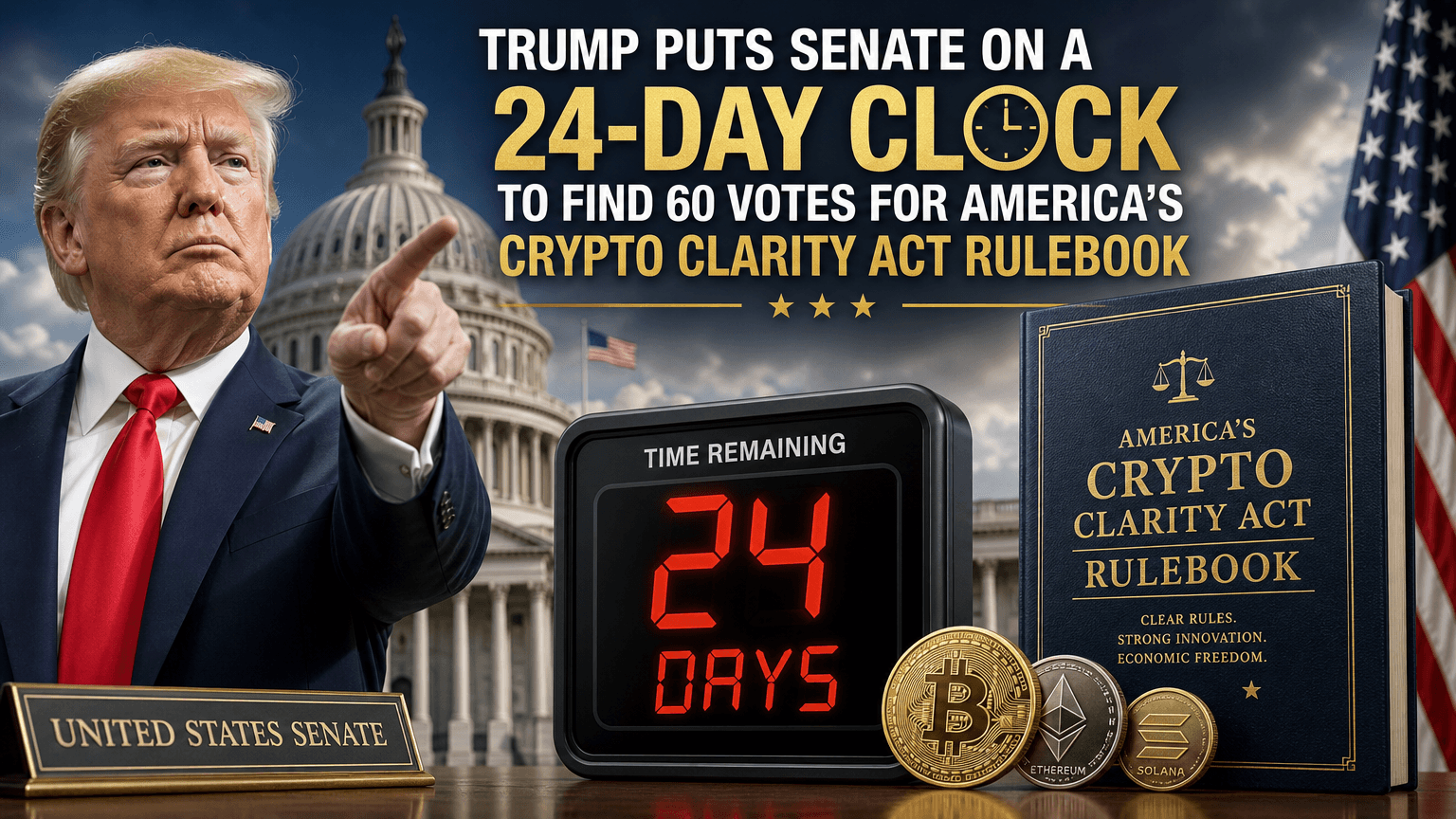
Trump puts Senate on a 24-day clock to find 60 votes for America's crypto CLARITY Act rulebook

Introduction to the CLARITY Act and Its Political Necessity
The CLARITY Act, which stands for Cryptocurrency Legal Architecture and Regulatory Integrity for Tomorrow's Yield, has been a focal point of legislative interest in the United States, especially as the country continues its competition with China in areas such as cryptocurrency and artificial intelligence. As the summer recess approaches, the urgency for its passage is increasing, with the White House amplifying calls for the Senate to act swiftly before the break.
Momentum and Administration Advocacy
In a push to invigorate legislative action, former President Donald Trump has emphasized the strategic importance of passing the CLARITY Act. As he articulated, the race with China over dominance in cryptocurrency and AI technologies is pivotal. The administration has launched a vigorous campaign to rekindle momentum around the legislation, viewing it as a milestone necessary to secure US pre-eminence in these emerging fields.
The Structure and Purpose of the CLARITY Act
The CLARITY Act is devised to create a robust federal framework for cryptocurrency oversight, dividing responsibilities between the Securities and Exchange Commission (SEC) and the Commodity Futures Trading Commission (CFTC). This division would give clarity to digital asset companies and investors, aiming to strengthen the US's position as a leader in cryptocurrency innovation and regulation similar to precedents set by the GENIUS Act concerning stablecoins.
Main Obstacles: Ethics, Stablecoin Incentives, and Developer Protections
Despite the concerted efforts to pass the legislation, certain key issues remain unresolved and could hinder forming a necessary bipartisan coalition. One significant hurdle lies in the ethical considerations associated with political figures and their potential conflicts of interest in digital asset markets. This has gained traction due to President Trump's disclosed financial interests in cryptocurrency ventures.
The bill also faces challenges regarding the regulation of stablecoin rewards. The GENIUS Act previously prohibited direct stablecoin interest, but banks argue that loopholes allow crypto platforms to offer competitive rewards, threatening traditional banking deposit inflows. Negotiations are ongoing, with banking groups pressing for more stringent restrictions.
Regarding developer protections, the act seeks to provide a safe haven for software developers involved in creating decentralized applications without them being classified as money transmitters. While this provision is supported by leading law enforcement organizations, some fear it could hinder financial crime investigations.
Political Dynamics and Legislative Timeline
The legislative process is under tight constraints, with a summer recess deadline looming and the need for considerable bipartisan support. The calculus of achieving the necessary 60 votes in the Senate is complicated by ongoing negotiations and unresolved issues. The death of Senator Lindsey Graham and subsequent appointment of a temporary successor further complicates the vote count.
If the Senate fails to act by the August recess, the opportunity to pass the CLARITY Act would shift to a limited September session. However, the proximity to midterm elections could derail focus, leaving a post-election lame-duck session as a last-minute venue fraught with uncertainty.
Conclusion
The fate of the CLARITY Act hangs in a delicate balance, impacted by unresolved disputes, political maneuvering, and a narrowing legislative calendar. Its passage could solidify the United States' regulatory stance in digital assets, maintaining an edge against global competitors like China. However, its future depends on navigating a complex web of political, ethical, and industry-specific challenges before the imminent legislative recess.