
4 min
10 Jun 26
AI, digital assets and the end of legacy compliance
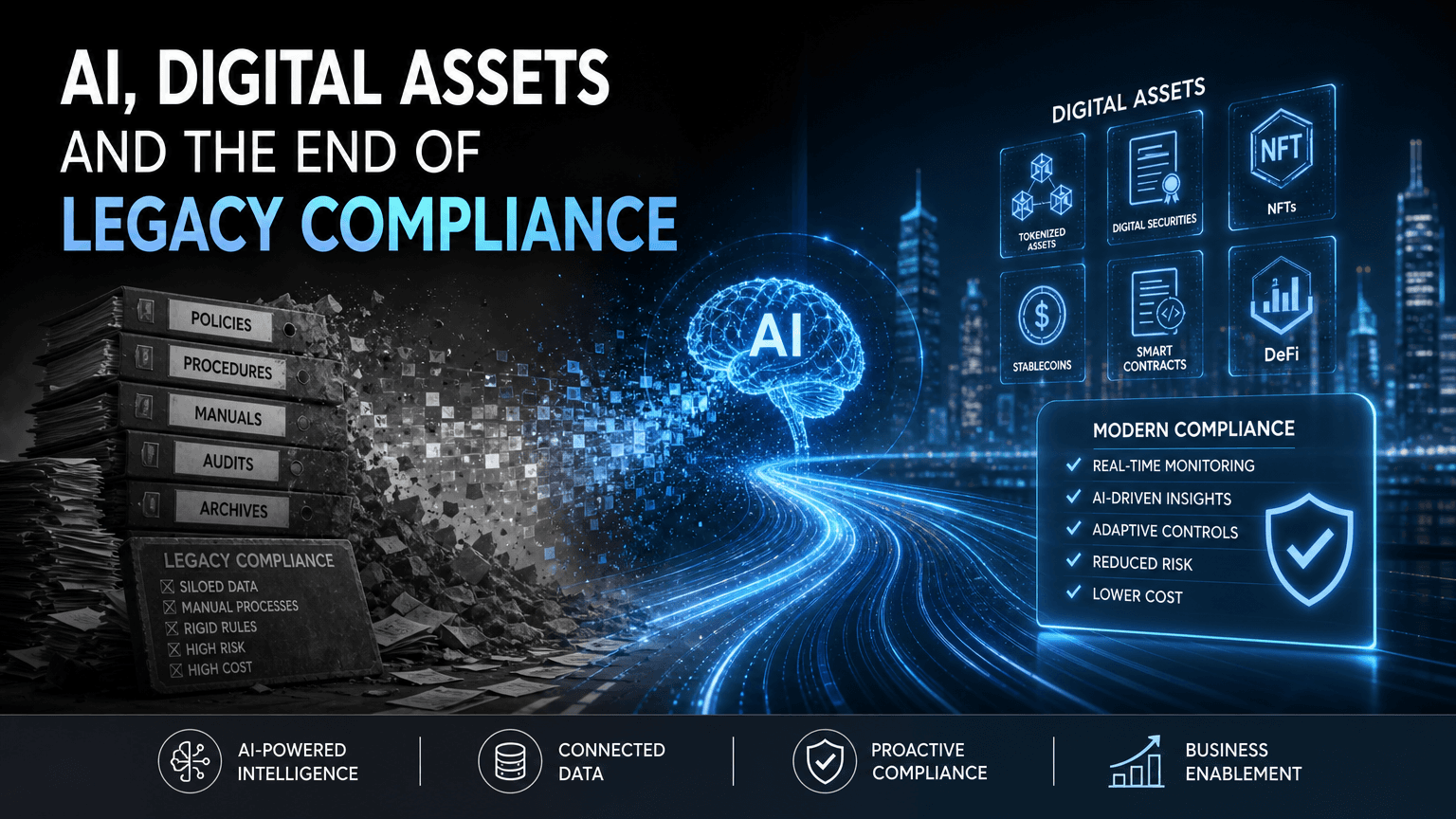

The Evolving Landscape of Compliance in Global Banking
In the last decade, compliance has transformed from a secondary function to a principal focus within global banks, shifting from the back office to the boardroom. No longer a quiet backstage operation, compliance now plays a crucial role in shaping how banking institutions manage growth, adopt new technologies, oversee employee behavior, and address evolving regulatory demands spanning multiple jurisdictions. This shift is a response to an increasingly complex operating environment where traditional compliance structures are struggling to maintain pace with rapid industry developments.
Understanding the New Compliance Challenges
According to StarCompliance, the landscape of compliance challenges extends beyond an influx of regulations. The modern banking environment is highly interconnected, and the traditional frameworks built to manage compliance risks are increasingly ineffective. StarCompliance identifies three primary areas of concern: global risk, artificial intelligence, and regulatory pressure.
Banks face the daunting task of navigating AI governance expectations, digital asset oversight, operational resilience requirements, and sanctions enforcement. Additionally, they are dealing with dynamic accountability frameworks within a mosaic of regional regulations. These challenges do not present themselves in a linear fashion; rather, they converge simultaneously, each demanding different supervisory expectations depending on the market.
The Balancing Act for Compliance Teams
For compliance teams, this convergence of challenges demands a delicate balancing act. These teams are responsible for enabling innovation and facilitating business growth while ensuring robust governance, consistent oversight, and real-time risk visibility across the organization. It’s a demanding expectation that tests the limits of traditional compliance models.
Why Traditional Compliance Models Are Under Pressure
Many banking compliance programs were developed for a regulatory environment that was more centralized and predictable. However, the current climate places significant strain on these traditional models. Banks are not only processing larger volumes of data but also managing employee activities across an ever-expanding range of markets and digital platforms. This increased complexity is coupled with more stringent reporting obligations from regulators who now place greater emphasis on the practical functionality of compliance controls.
This paradigm shift is compelling banks to reevaluate their compliance infrastructures. Disconnected systems, fragmented reporting, and manual oversight processes generate operational inefficiencies and leave banks vulnerable to regulatory scrutiny when evidence, escalation histories, or audit trails are requested at short notice. This scenario has prompted many to reassess the integration of compliance technology, governance, and data management at the enterprise level.
The Accelerating Role of Artificial Intelligence
The adoption of artificial intelligence further accelerates this transition. Banks increasingly explore AI-driven tools for surveillance, monitoring, and risk detection. However, the regulatory climate is simultaneously evolving, raising essential inquiries around governance, accountability, explainability, and model oversight. For compliance leaders, the issue is no longer about whether AI should be deployed but about how to integrate it responsibly within existing regulatory frameworks.
Expanding the Risk Perimeter
The intersection of traditional finance and digital assets marks another significant shift. The burgeoning field of cryptocurrency trading, tokenized assets, decentralized finance platforms, and prediction markets introduces new forms of employee conduct and informational risks that were unforeseen by many existing surveillance programs.
This is of particular concern for global financial institutions where regulators are intensifying their focus on conflicts of interest and employee trading activities that span beyond conventional brokerage accounts. Financial institutions now acknowledge that compliance oversight cannot be limited to traditional securities trading alone. Programs must incorporate visibility across a wider range of financial activities, supported by adaptive technologies that adhere to evolving market structures.
Embracing Connected Compliance
As regulatory complexity burgeons, many banks are transitioning towards centralized and interconnected compliance operating models. The focus increasingly lies on integrating governance, surveillance, employee disclosures, case management, reporting, and audit documentation into cohesive frameworks that are scalable globally yet accommodate regional regulatory nuances.
StarCompliance stands at the forefront of this evolutionary shift. For over 25 years, the company has partnered with financial institutions globally to help manage a gamut of compliance needs—from employee regulations and conflicts of interest to personal account dealing and information barrier controls using sophisticated compliance technology.
In the journey toward modernizing compliance infrastructures, technology has transitioned from being a supportive function to a quintessential operational necessity. It ensures that financial institutions manage risks consistently across jurisdictions, placing them in a stronger position to navigate an ever-complex compliance landscape.